
C.S. Lewis: Timeless and Timely
From WWII to Covid to Donald Trump
Matthew Galgani
In 1941, C.S. Lewis began airing essays on the BBC, talks that would become the basis of Mere Christianity. That was nearly a decade before The Lion, the Witch and the Wardrobe , the first Narnia book, came out in 1950.
Now, fast forward to 2020 and the Covid pandemic, which hit at the end of the first Donald Trump administration. Jump ahead once more to the second Trump administration and the civil and geopolitical unrest surrounding immigration, the Middle East and more, all of which have bitterly divided our country. Some will view the problems as outrageous overreach by President Trump, while others will blame former President Biden for letting these issues fester and metastasize for political gain.
In the current environment, it's difficult, at best, to have a civil and open discussion of such issues. Finding perspective and common ground, let alone workable solutions, can seem almost impossible.
As such thoughts come to mind, I'm reminded of a series of talks I came across during the pandemic by the Rev. Brian McGreevy from St. Phillip's Church in Charleston, South Carolina. His discussions covered The Screwtape Letters and other topics, offering insights and the kind of perspective that are often in short supply.
It's obvious that social media, Google's manipulative algorithms and endless arguments over misinformation vs. disinformation and the truth vs. my truth have sewed mistrust, confusion and anxiety. The rise of artificial intelligence has only exacerbated the problem.
But as I listened to Rev. McGreevy and revisited the works of C.S. Lewis, I was struck by two things: (1) how much our current troubles pale in comparison to those of WWII, and (2) how hopeful Lewis remained during the very darkest days of that war.
While England was fighting, quite literally, for its survival, Lewis embraced hope rather than despair. And it wasn't blind faith or delusional hope. I think Lewis was too thoughtful for that.
He didn't seem to harbor any illusions about how dire the situation was. Yet, like with Winston Churchill, defeat was never an option. A possibility, but not an option. If I had to guess, I would say that distinction was part of what girded the faith and conviction of both men.
Your Tribe vs. My Tribe
So when people today, myself included, get worried about the future, I think a little perspective goes a long way. While it's easier said than done, before writing off what someone says as stupid, ignorant or just plain wrong, we should all take a beat and ask a question or two.
Get out of the right vs. left, my tribe vs. your tribe mindset. Try to see what makes people with differing opinions tick. We might not agree on what makes sense, but hopefully we'll at least have a better understanding of why they take that stand. It also gives an opportunity to reflect on and question our own opinions and beliefs.
Isn't that what an open discussion is supposed to do? In today's often bitterly and reflexively divided world, debates often devolve into some comedically dystopian version of the Monty Python argument sketch. Let's get beyond just "yes, it is," "no, it isn't."
A little nuance, humility and humor would do us all good.



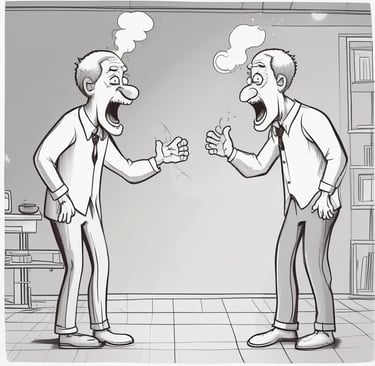
"For what you see and hear depends a good deal on where you are standing."
— C.S. Lewis, The Magician's Nephew
Join the Newsletter!
Matthew Galgani
matt@matthewgalgani.com
© 2026 Matthew Galgani. All rights reserved.