Doubting nikki Available Now!

C.S. Lewis, Walter Hooper...and Me?
A chance encounter and somewhat squandered opportunity.
Matthew Galgani
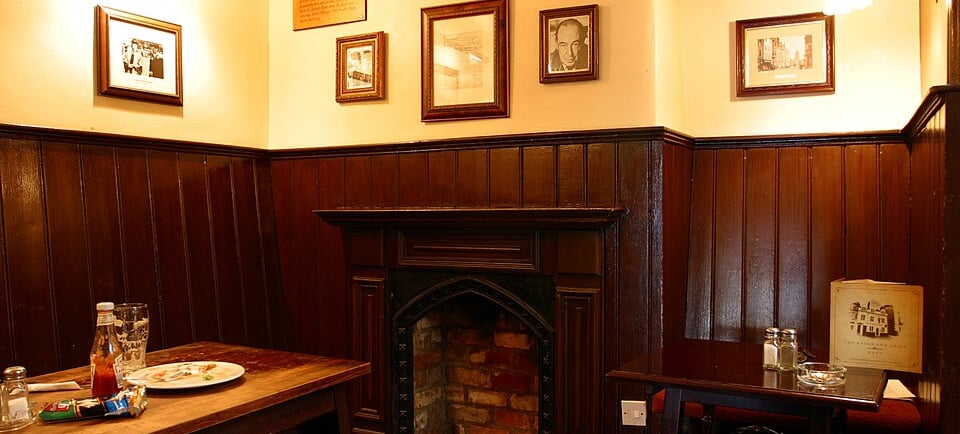
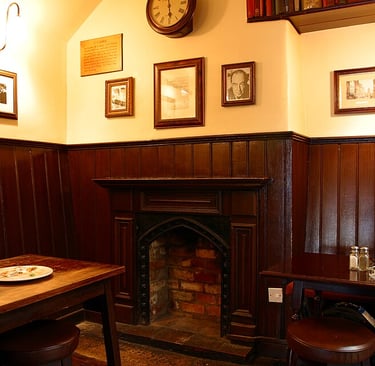
I never got a chance to meet C.S. Lewis, but well within the parameters of the six degrees of Kevin Bacon game, I was lucky enough to meet and spend some time with his personal secretary, Walter Hooper.
As I explain in the About section of this site, I met Mr. Hooper on my first visit to the The Eagle and Child pub in Oxford. I was standing there reading a plaque that explained how Lewis, J.R.R. Tolkien, Dorothy Sayers and other members of the Inklings literary group used to hang out at the Bird and Baby, as the pub is also known.
As I was reading the plaque, a man with an American accent asked if I liked C.S. Lewis. I told him I did. I was a bit taken aback to hear the hint of a southern American twang rather than a British accent, but what surprised me most was how Mr. Hooper suggested we grab a pint and sit down.
Having just moved to Oxford on a study-abroad program from the University of San Francisco, I was excited just to be in same pub where Lewis and Tolkien used to socialize, having read about it at USF. Now, here I was listening to Mr. Hooper tell me he had been the personal secretary of C.S. Lewis in the later stage of his life, and was now the primary editor of Lewis’s posthumous works.
I could hardly believe my good fortune. What made it even more incredible was that Mr. Hooper then offered to personally show me around Oxford and the old haunts of Lewis and Tolkien, as well as introduce me to the Oxford C.S. Lewis Society.
To do this day, I don’t know why he was so generous. But in the days and weeks that followed, he showed me around Magdalen College, Merton College and elsewhere, giving me access I would never have been granted on my own.
But as they say, youth is wasted on the young. While I most definitely appreciated this chance encounter at the time and thanked Mr. Hooper for his exceptional generosity, it wasn’t until years later that it really sunk in just how incredibly lucky I had been.
(In one of my biggest regrets, I lost touch with Mr. Hooper after returning to the U.S. When I finally came to my senses — decades later, I’m embarrassed to admit — I tried to reach out to him through his publishers and local C.S. Lewis societies, but it was too late. I came to find out he had passed in 2020. Rest in peace, Walter Hooper. You may not have remembered me and our short time together, but I will always treasure the memory.)
Doubting Nikki and Miracles
While at USF, both before and after Oxford, I studied Christian philosophy. One professor made a particular impression: Fr. Joseph Fessio, the founder of the St. Ignatius Institute within USF.
Like the works of C.S. Lewis, Fr. Fessio’s lectures had a way of presenting complex subjects in an understandable and relatable way. Anyone who thinks people of faith are delusional and/or simple-minded should read Lewis and have a chat with Fr. Fessio. That will quickly dispel them of any such notion.
During that time of my life, two concepts Fr. Fessio discussed particularly resonated with me.
One was that everyone is dogmatic. Always. They may change their mind sometimes and embrace a different dogma. But people instinctively and emphatically espouse what they believe is true — until they shift gears and believe something else. That becomes their new dogma, which they instantly believe just as fervently as the one they just discarded.
A second concept that has stuck with me was had to do with the nature of miracles, and whether they are possible or not — whether they can simply be explained away by nature or whether they are supernatural, that is, distinct from and outside of nature.
I later reread Miracles by C.S. Lewis, which reinforced that concept and, of course, explained it far better than I ever could.
Both of these concepts resonated with me, and still do. And they both helped inspire the underlying themes of my novel, Doubting Nikki — A Tale of Faith and Delusion.
I’ve taken a lot of liberties and poetic license in the book, but — at least to me — these and related messages infuse the narrative as the story unfolds.
If that is of interest, I hope you’ll consider giving Doubting Nikki a read. And I hope you’ll give Fr. Fessio’s podcast — Father Fessio in Five — a listen, if you haven’t already.
Photo © Creative Commons Corporation